Multifamily DSCR Loans Compared With the Alternatives
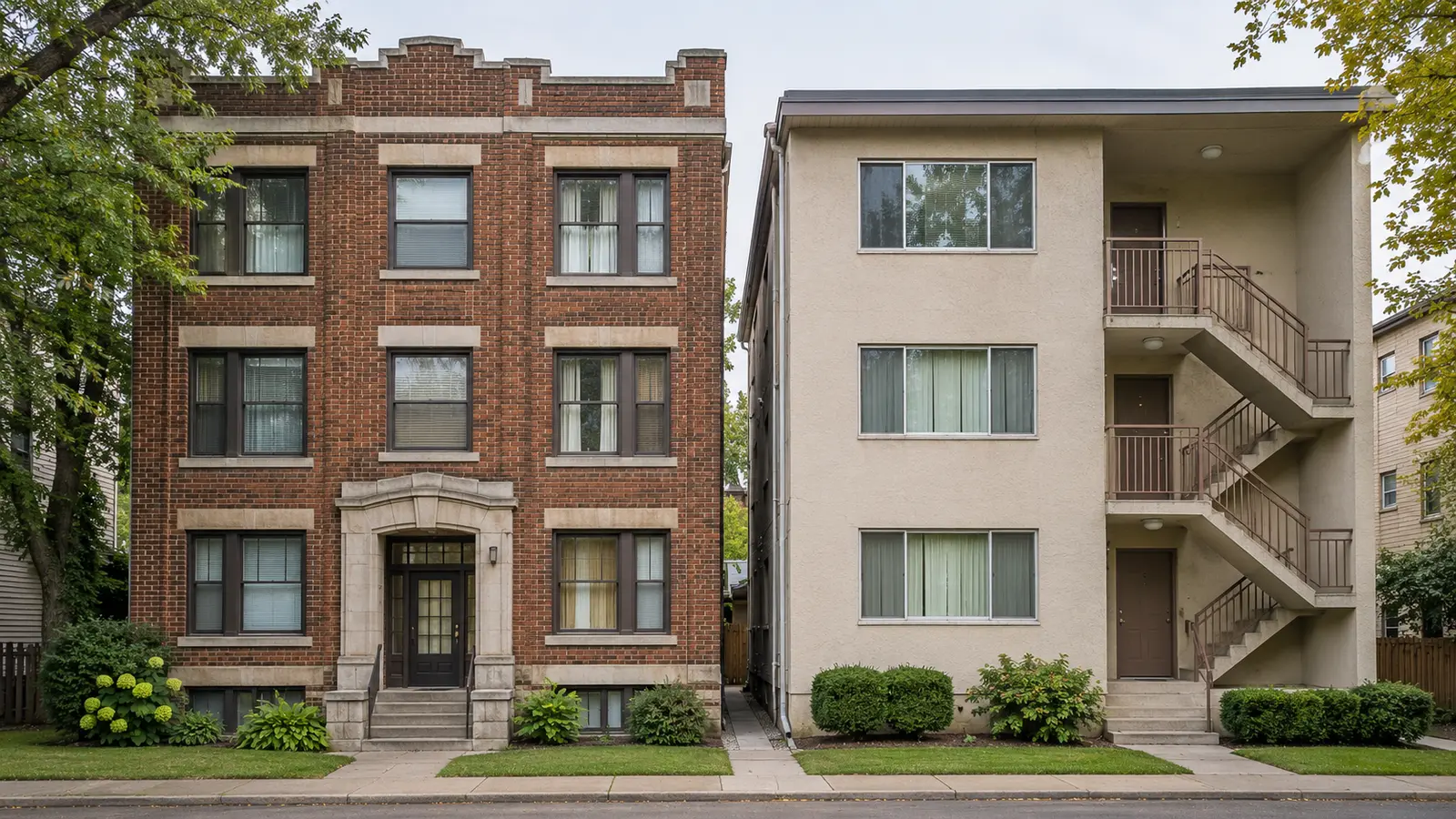
Is a DSCR loan the right debt for this building?
Sometimes it is not. A lender publishes this reference, so treat this section as the place where we argue against our own product. Each comparison says who should take the other loan and why.
It helps to know what a DSCR loan trades. You get qualification on the property with no personal tax returns and no debt-to-income test, closing in about 14 business days once the file is complete, and 30-year amortization. You pay for that in rate: 5.75%–10.5% (as of August 2026). Other capital sources make a different trade, and the comparison pages lay each one out against the same small building.
Seven lenders and three structure choices
The lender pages fall into three groups. Agency small-balance and FHA/HUD 223(f) are the institutional options. They are built for stabilized properties, come with more process, and reward borrowers who can wait. The bank, credit union and general commercial mortgage pages cover relationship lending, where the borrower’s whole financial picture goes into the decision and shorter terms with a balloon are common. Bridge and seller financing are the options for a building, or a seller, that does not fit permanent debt today.
The structure pages are a different kind of comparison. They assume you have chosen a DSCR loan and ask which version. Fixed versus ARM versus interest-only sets the payment and how it can change. The 30-year versus balloon page prices the refinance risk a shorter term hands you. The LTV, DSCR and debt yield page explains which of three limits is capping your loan amount, which tells you whether a lower rate or a higher value would get you more proceeds.
How to use the comparisons by situation
If this is your first purchase on the commercial side of the line, read the bank page and the agency page. Those are the two quotes you are most likely to be holding next to ours, and the pages show how to line up terms that are not quoted the same way.
If you own and are refinancing, start with the structure pages. Your lender choice is often already narrowed by timing or by how your income documents look, and the open decision is fixed or adjustable, amortizing or interest-only.
If the building is partly vacant or mid-renovation, go to the bridge page before any other. It answers the sequencing question, and the answer is frequently bridge first.
Brokers can treat the lender pages as placement notes. Each one names the borrower and property profile that belongs with the other lender, which is quicker than learning it from a decline.
What the comparisons assume you have read
Every page here uses the lender’s NOI and its minimum ratio without rebuilding them; the underwriting pages do that work. Prepayment, ARM mechanics and interest-only terms are explained at length under loan terms, so the structure pages stay on the choice itself. Once you have decided, the list of questions to ask a lender, in the downloads, turns the comparison into a call script.
- Freddie SBL and Fannie small loans
A term-by-term comparison of a multifamily DSCR loan with Freddie Mac's Conventional Small and Fannie Mae's Small Mortgage Loan, sourced to the agencies' 2026 term sheets, with the cases where each one wins.
- local bank financing
Bank portfolio debt against a DSCR loan on a 5+ unit building: global cash flow versus property-only underwriting, the balloon, the federal LTV ceiling, recourse, and one 8-unit run both ways.
- commercial mortgage comparison
Where a 5+ unit DSCR loan sits among commercial mortgages: what bank, life company and CMBS loans add in sponsor tests, term, prepayment and debt-yield sizing, with a 40-unit sized both ways.
- choosing bridge or DSCR
Which loan goes first on an apartment building, what a bridge year costs in interest on a half-empty 9-unit, and the occupancy and seasoning figures that let a DSCR loan replace it.
- HUD 223(f) comparison
HUD 223(f) rules from the MAP Guide set beside JFG's DSCR terms: term, leverage, coverage, the 2025 insurance premium, repair limits, reserves and the application steps, with a 40-unit run under both loans.
- DSCR versus a credit union
The federal rules behind a credit union apartment loan: membership, the business lending cap that begins at five units, the one-borrower limit, the 15-year maturity and the ban on prepayment penalties, set against DSCR terms.
- seller financing
How a negotiated seller note compares with a 30-year DSCR loan on a small apartment building: the balloon, the seller's installment-sale tax rules, IRS minimum interest, and when a seller second can sit behind a first mortgage.
- rate structure comparison
A decision page for the rate structure on a multifamily DSCR loan: which of fixed, ARM and interest-only suits each hold period, with a 14-unit run through all three over seven years.
- balloon loans
Sets a fully amortizing 30-year DSCR loan beside a bank balloon on one 8-unit: the monthly payment, what is still owed in year seven, and how to test the refinance before signing.
- how the loan is sized
Explains the three loan sizing tests on an apartment building, which one limits the loan, and why a rate change moves only the DSCR result, with a 22-unit sized at two rates.